Metal Shielding vs Sprayed Plastic: Why 100dB Matters
- Share
- publisher
- SOMI Engineering
- Issue Time
- Nov 7,2026
Summary
Shielding figures are routinely quoted and rarely measured. A sputtered aluminium film on a plastic housing is not the same thing as a die-cast enclosure bonded to the connector bodies. This article explains what 100 dB means in practice, how ingress from LTE and 5G shows up on screen, and what to check on incoming goods.
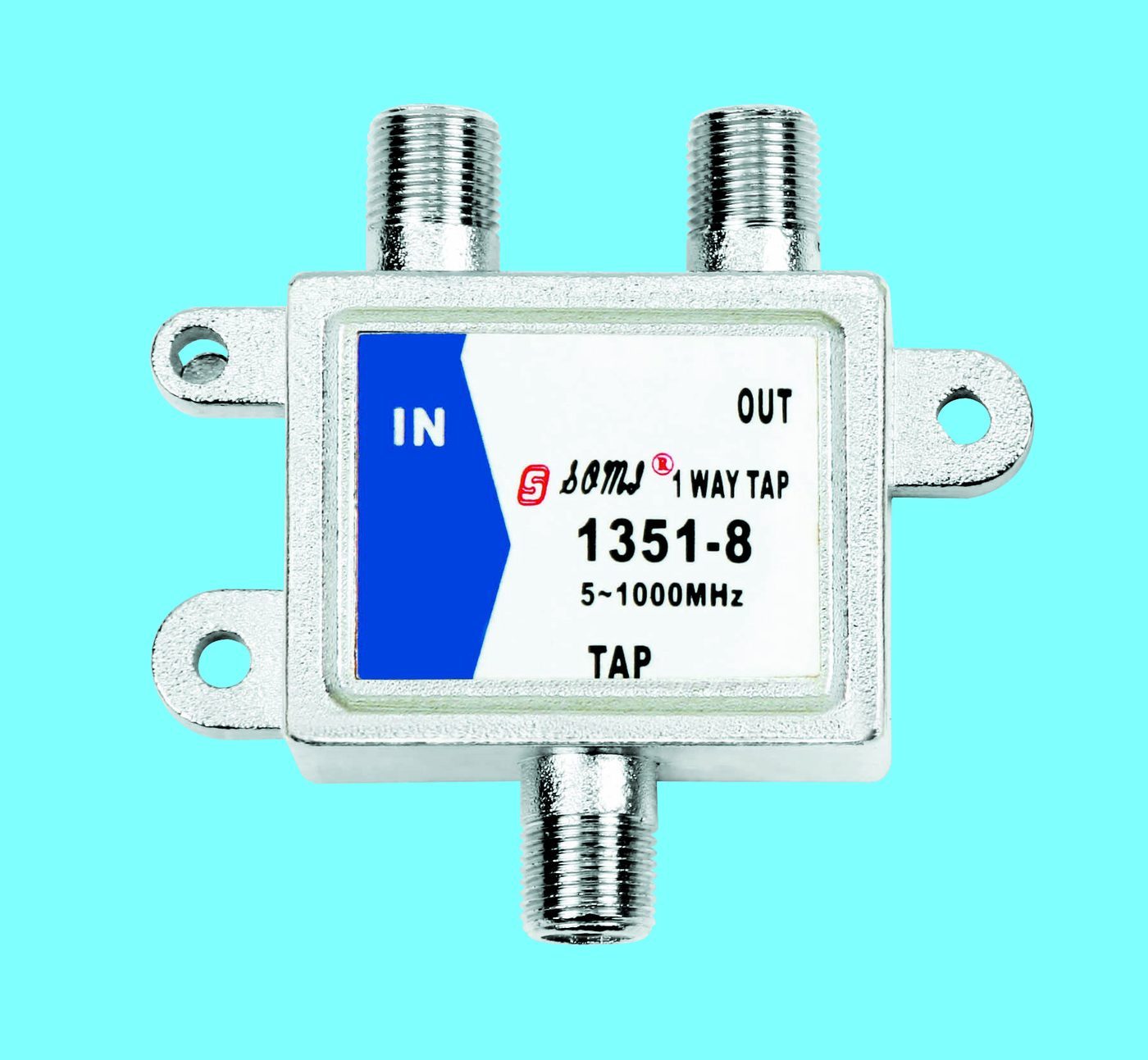
Shielding effectiveness is measured in decibels of attenuation from outside the housing to the signal path inside. A die-cast metal housing bonded to the connector bodies can reach 100 dB, which means an interfering field 10 billion times stronger than the wanted signal is reduced to the level of that signal. A plastic housing with a sprayed aluminium film does not reach that figure, because the coating is thin, resistive and interrupted at seams and connector cut-outs. The gap matters most between 700 and 900 MHz, where LTE and 5G downlinks sit next to terrestrial TV.
What a shielding number is actually measuring
Shielding effectiveness compares the field that reaches a circuit with the field that would reach it with no enclosure. It is expressed in dB and it is frequency dependent: a thin conductive film that attenuates 40 dB at 100 MHz may attenuate 10 dB at 1 GHz, because the film's sheet resistance dominates as frequency rises. Quoting a single figure without a frequency band is therefore close to meaningless.
A 100 dB figure at the TV band means the housing and its seams attenuate the interfering field by ten orders of magnitude. That is the difference between a receiver that ignores a nearby base station and one that shows a mosaic of blocking artefacts whenever the transmitter is busy. It is also the difference between passing and failing an operator's site acceptance test.
Why sprayed plastic fails the physics
Sprayed or sputtered coatings are microns thick. Their conductivity is a fraction of solid aluminium, and the coating is interrupted wherever the housing has a seam, a screw boss, a ventilation slot or a connector cut-out. Shielding depends on a continuous low-impedance path around the enclosure and on a 360-degree bond to the cable screen. A plastic shell provides neither, so the coating behaves as a partial absorber rather than a shield.
The installer quote that started this series described exactly this construction: "Screened by aluminium sputtered on the plastic case. Cheap components, so the smoothing caps fail = hum = extra noise = signal becomes rubbish, despite the red light being on." The coating is visible, so the product looks screened. It is not screened in any way a measurement would accept.
How interference actually appears
Ingress rarely looks like a clean picture with a bit of noise. It looks like blocky artefacts on one multiplex, a channel that fails only in the evening, or a receiver that reboots when a phone is used nearby. Because the symptom is intermittent, it gets blamed on the aerial, the cable or the broadcaster.
- Blocking artefacts on a single multiplex while neighbours are clean: narrowband ingress, often at a mobile downlink frequency.
- Picture degrading when a mobile handset is used within a few metres: insufficient shielding at the splitter or wall outlet.
- Whole-band noise rise after a new base station is commissioned: front-end overload rather than shielding, cured by filtering before amplification.
- Hum bars plus noise: the supply failure described in the previous article, not an ingress problem at all.
The 100 dB figure in a real product
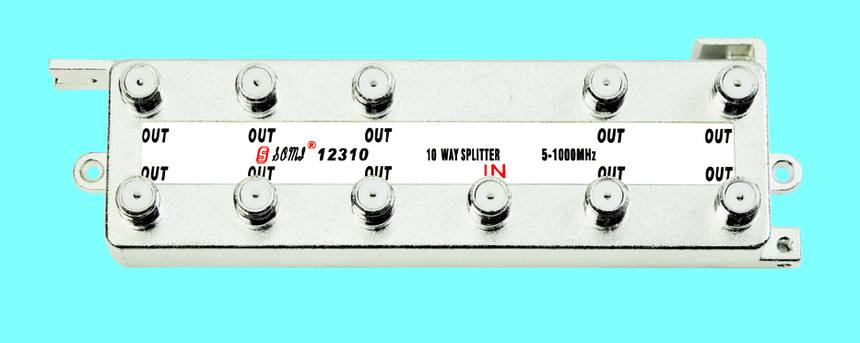
The 2202 2.6 GHz splitter is specified at 100 dB shielding in a die-cast housing, with isolation of 18 to 23 dB across the band. Those two numbers work together: shielding keeps external fields out of the transformer, isolation keeps one port's energy out of another. A plastic alternative can be made to pass a bench test with a single carrier, then fail in a cabinet where four services share the same enclosure.
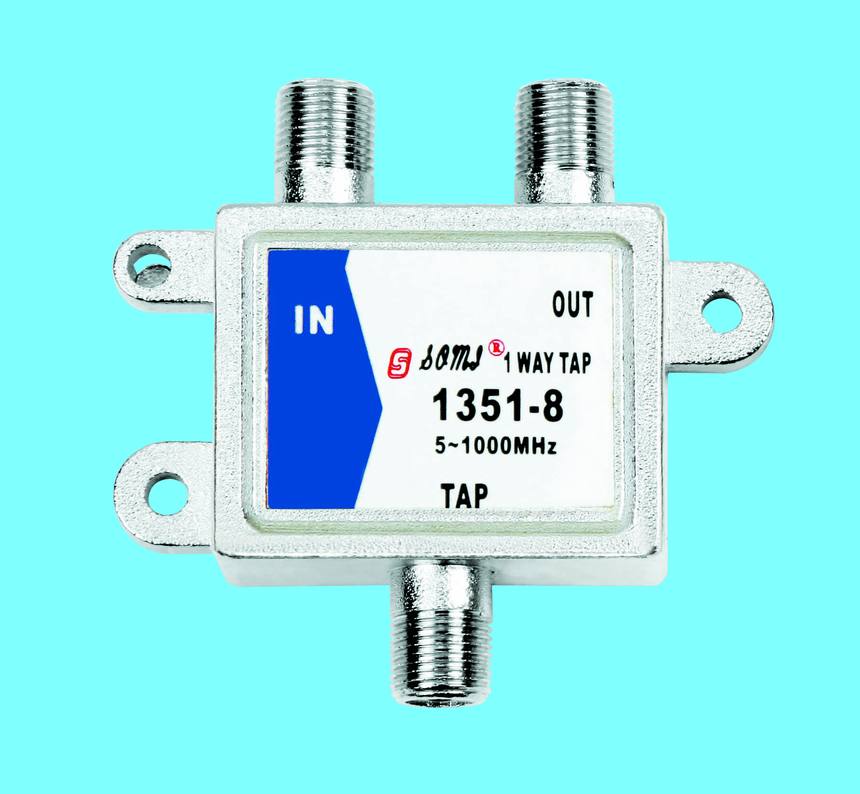
For outdoor and trunk positions the same logic applies to CATV taps, where a weatherproof die-cast body also solves the corrosion path that a coated plastic shell cannot survive.
It is worth separating two problems that look identical on a screen. Shielding stops energy from reaching the signal path. Filtering removes energy that has already been coupled into the cable screen, which is what an LTE filter does at the amplifier input. A housing cannot substitute for a filter, and a filter cannot compensate for a housing that leaks. Installations near a base station usually need both, applied in that order: filter first, then amplify, inside an enclosure that keeps the remaining field out.
Incoming inspection for shielding
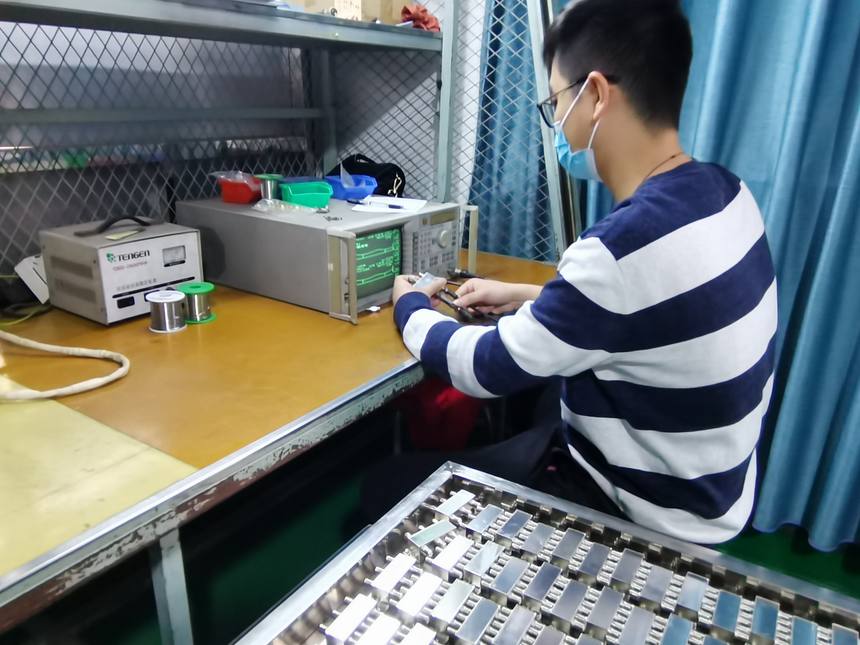
None of this requires a shielded room. The checks below catch the common substitutions, and they take less time than processing a return.
- Continuity from connector body to housing, and from port to port.
- Flex the housing gently while watching the reading; a stable short indicates a bonded enclosure.
- Inspect the inside surface for coating wear around screws and cut-outs.
- Confirm the datasheet states a shielding figure with a frequency band and a test method.
- For outdoor parts, confirm the housing is die-cast rather than coated plastic, and check the gasket.
Why the cost difference is smaller than it looks
A die-cast housing adds material and machining cost, and it is the first item a cost-down exercise removes. The saving is real at the unit level and disappears at the installation level the first time an operator rejects a cabinet for ingress. Buyers who specify shielding in dB, with a test method, get a different conversation from suppliers than buyers who specify a colour.
Need this checked against your own signal chain?
Tell us the interference environment and the services sharing the enclosure, and we will match the housing and shielding class to it. Send the details through our inquiry form or reach the team on the contact page.
Request a quotation